PeckerFish
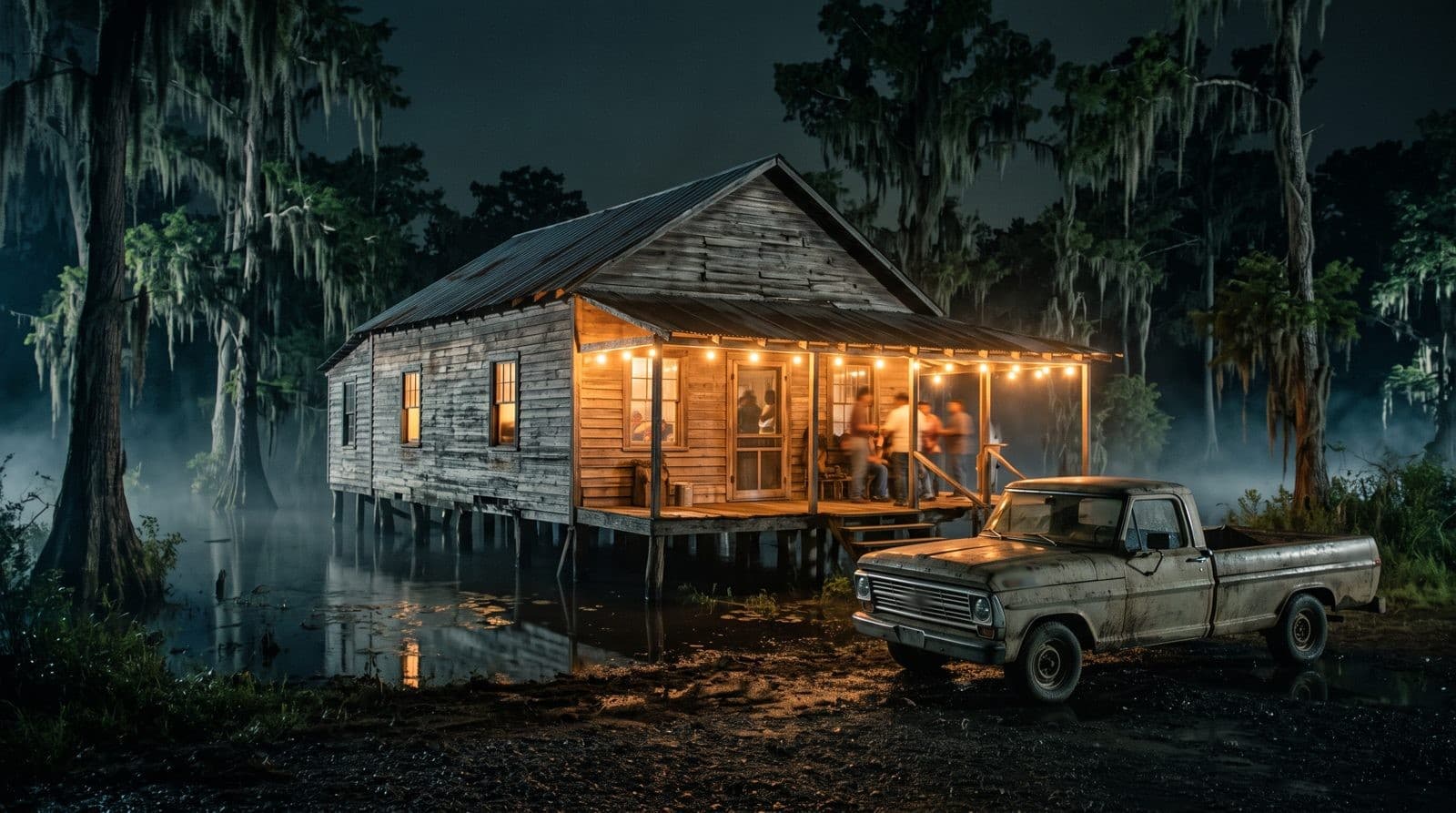
A tin-roofed dance hall on stilts at the edge of a bayou at night, string lights along the porch, people on the steps and an old pickup on the shell lot

PeckerFish

From the swamp. For the swamp.

Port Vincent, Louisiana · 1969–1981

Bayou Records
Dance Saturday9 till 1$1.50Water permitting

Sideband Label ArchiveCard 1 of 5

PeckerFish

PeckerFish formed in the fall of 1969 at a bait shop on the Amite River at Port Vincent, twenty miles east of Baton Rouge. Lucien Guidry ran the shop. He played harmonica behind the counter when the fish were not biting. Jules Comeaux came in for crickets and stayed to keep time on a minnow bucket. Dudley Landry tied up his skiff at the dock between shifts on the Mississippi barges. Alcide Melancon had played fiddle at church dances and fais do-do for twenty years. Lucien asked him to play louder. He did.

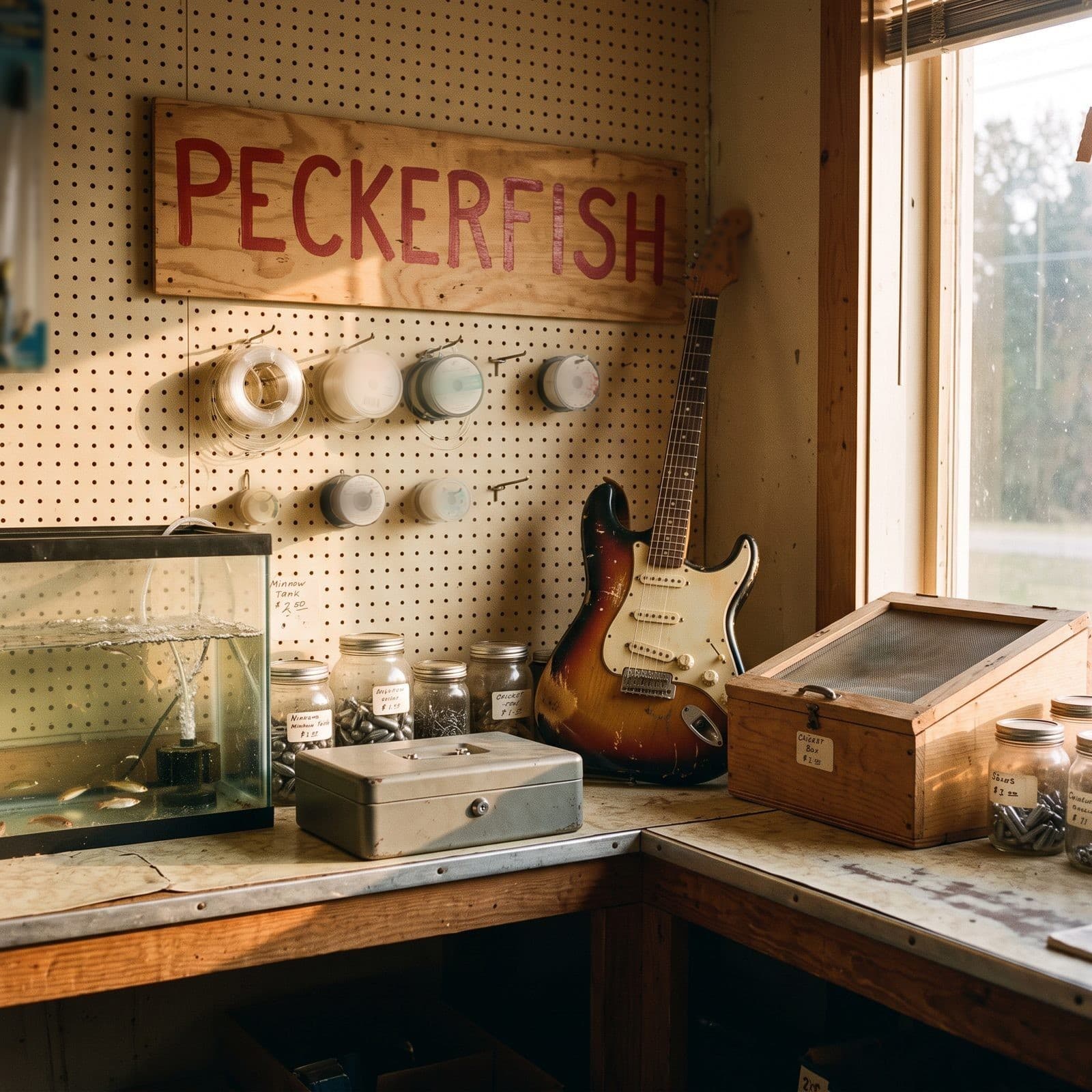
The first show was on the shell lot behind the shop, on a Saturday in September 1969. Lucien painted the sign that afternoon on a sheet of plywood. It hung over the counter for the next twelve years.
Archive note

Under the sign

Port Vincent, on the Amite River, 1969. Four men, a bait shop and a plywood sign.

Home
Port Vincent, on the Amite River
Mailing
Baton Rouge, Louisiana
Years
1969–1981
Sound
Swamp rock, swamp pop, waltzes and two-steps
Records
Three, on Bayou Records
Shows
Saturday nights, water permitting

“Count it in slow. They came to dance.”

— Lucien Guidry, to the band, most Saturdays 1969–1981
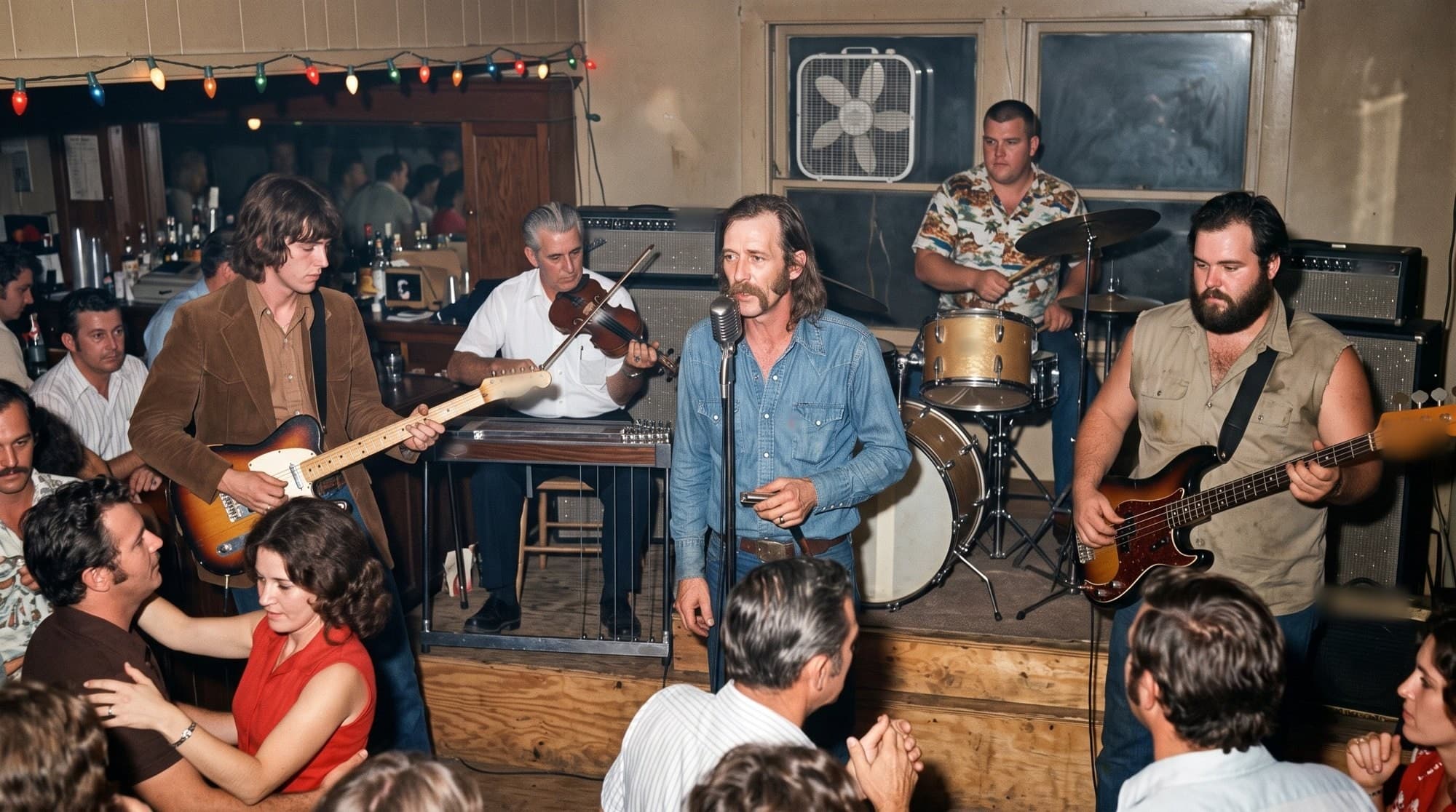
Five men playing on a low plywood stage in a crowded south Louisiana bar: a long-haired singer with a harmonica at a vintage microphone, a young guitarist in a corduroy jacket, a gray-haired fiddler seated at a lap steel, a bearded bassist and a drummer in a Hawaiian shirt; couples dance in front
Saturday night, 1974. Left to right: Hebert, Melancon, Guidry, Comeaux, Landry. The river was low.

Tacked behind the counter

The band

Five men, one sign. Each is filed with a bait-shop price tag, as Lucien filed them.

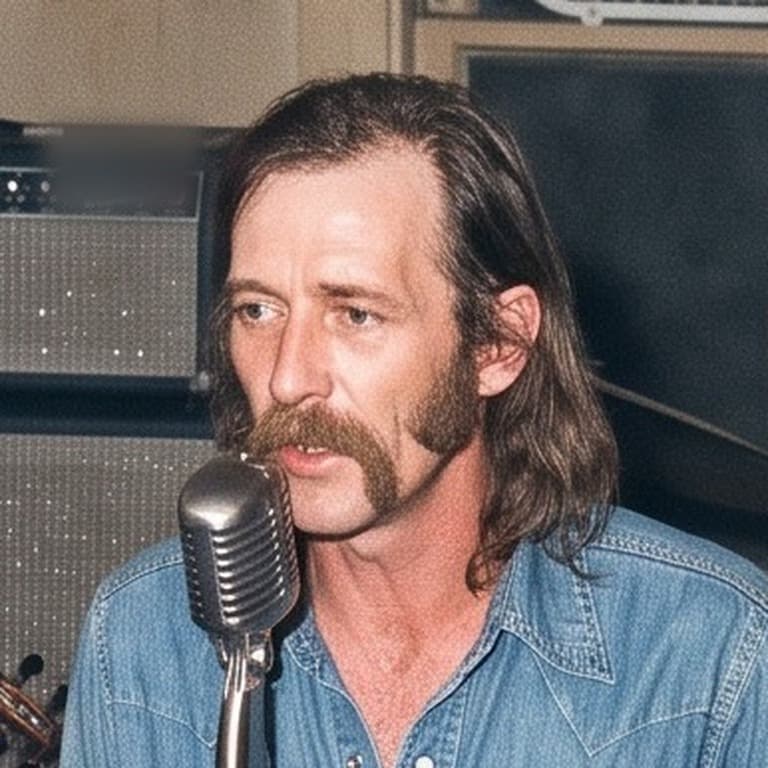
Lucien Guidry, long hair and sideburns, a drooping mustache and a denim western shirt, singing into a vintage microphone
Lucien “Bait” Guidry

Tag No. 1

Lucien “Bait” Guidry

Lead vocals, harmonica, bandleader

On the sign 1969–1981 · Day job: the bait shop

Cups the harmonica around the microphone for every verse. Takes it off the microphone for the last chorus so the room can hear the fiddle.

“Count it in slow. They came to dance.”

Now: Sold the bait shop in 1981. Lives in French Settlement. Fishes the Amite on weekday mornings. The sign is in his carport.

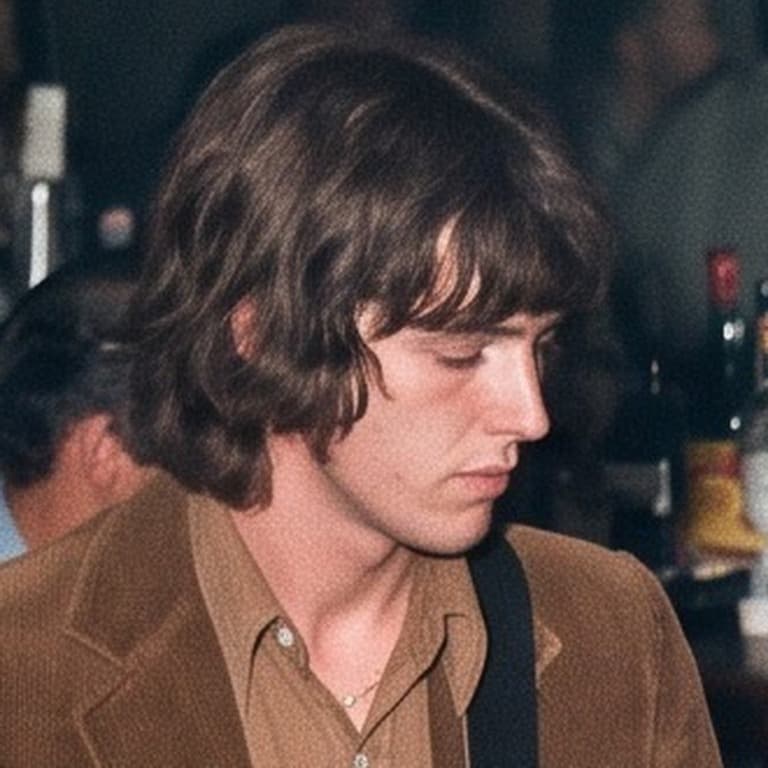
Remy Hebert, young, with shaggy brown hair and a brown corduroy jacket, looking down at his guitar
Remy Hebert

Tag No. 2

Remy Hebert

Lead guitar

On the sign 1971–1981 · Day job: outboard motors

Joined at seventeen, in 1971. Left the sunburst guitar on two nails behind the bait-shop counter between shows, for ten years. Nobody touched it.

“It's safer on the wall than in my truck.”

Now: Repairs outboard motors in Gonzales. Plays guitar at a crawfish boil if he is asked twice.

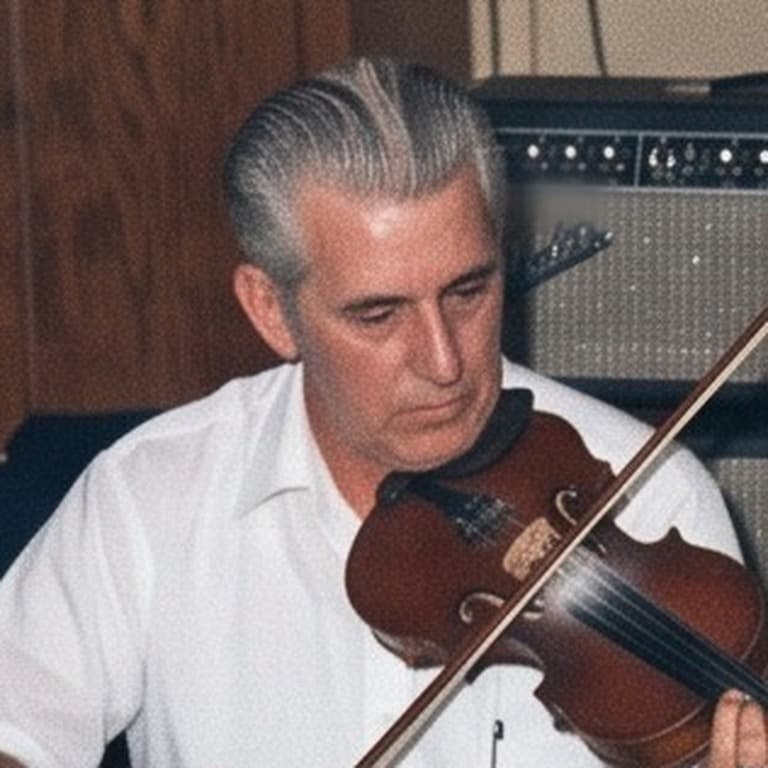
Alcide Melancon, slicked-back gray hair and a white short-sleeved shirt, playing fiddle
Alcide “Cid” Melancon

Tag No. 3

Alcide “Cid” Melancon

Fiddle, lap steel

On the sign 1969–1981 · Day job: church dances

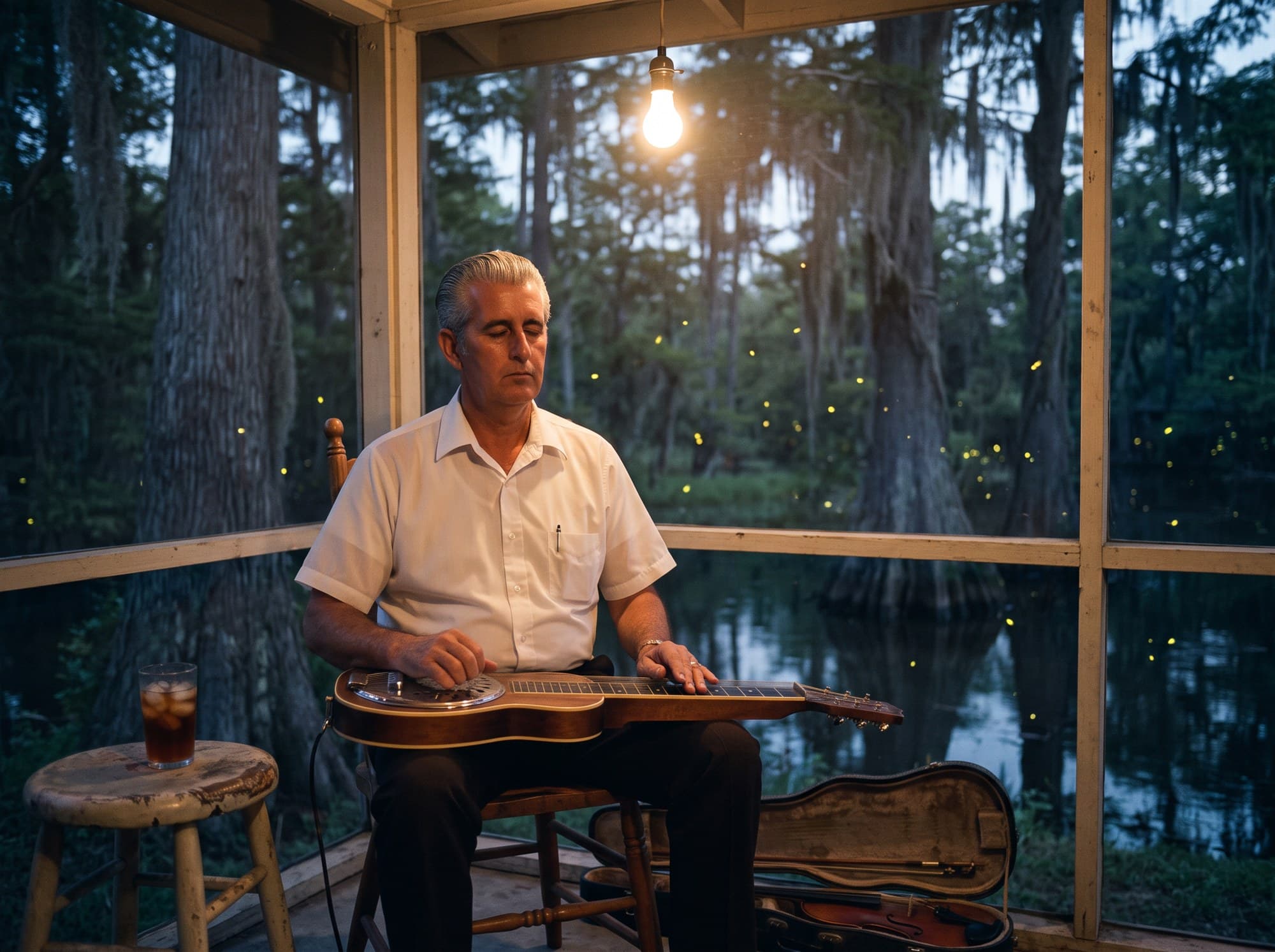
Plays seated. Fiddle for the waltzes and two-steps, lap steel across his knees for the slow ones. Asked for the same amplifier setting every night from 1972 to 1981.

“Twenty years I played soft. Nobody told me I could stop.”

Now: Played church dances until 1992. Died at home on Bayou Manchac in 1994, aged seventy-nine. His fiddle went to his granddaughter, who plays it at the same dances.

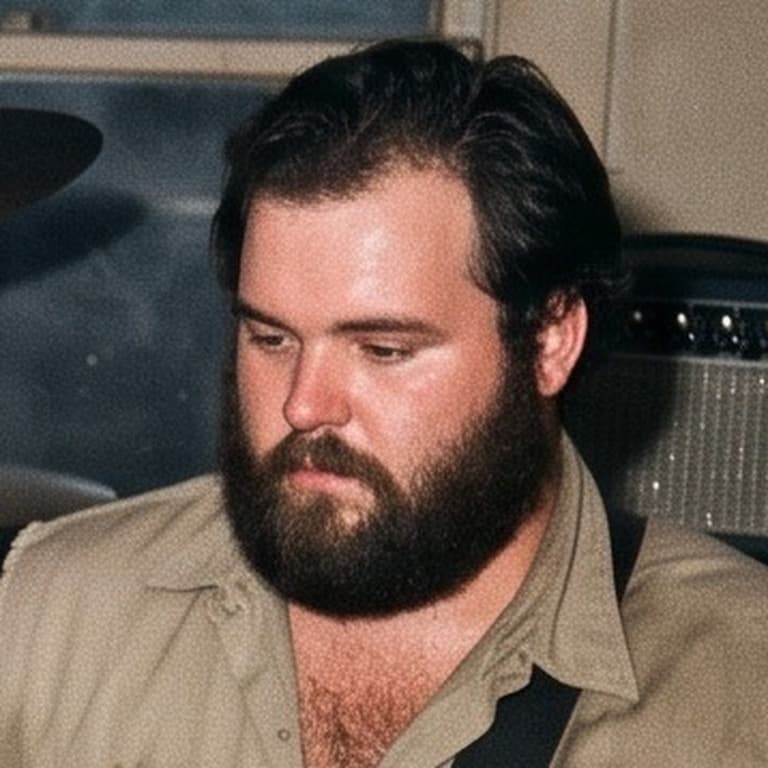
Dudley Landry, heavyset with a full dark beard and a khaki work shirt, playing bass
Dudley Landry

Tag No. 4

Dudley Landry

Bass

On the sign 1969–1981 · Day job: the river barges

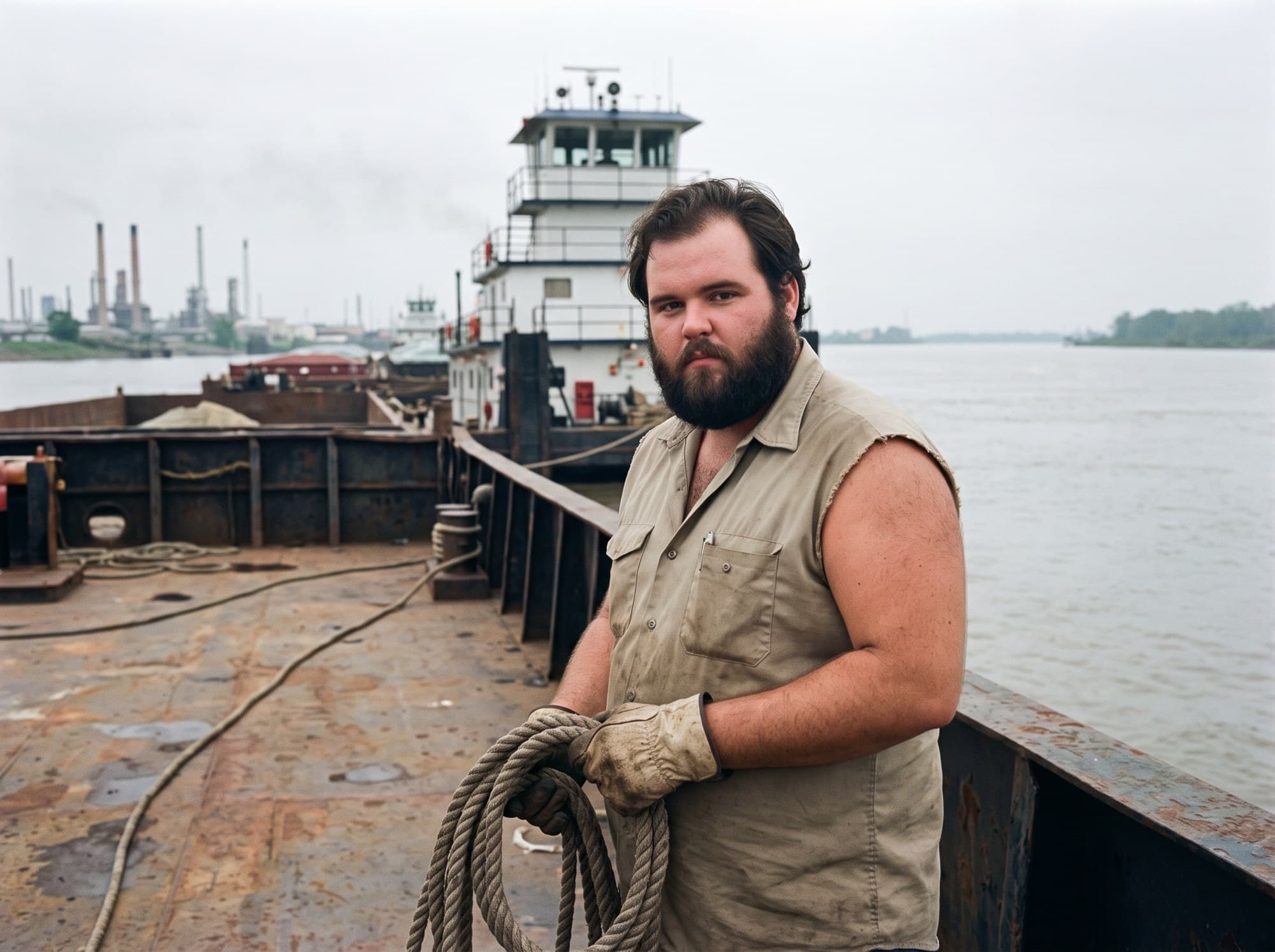
Worked the Mississippi barges out of Baton Rouge, 1966–2003. Missed every show the river kept him for. The band wrote the river stage in his place.

“If I'm not there, look at the river.”

Now: Retired from the river in 2003 as a towboat mate. Lives in Plaquemine. Writes the river stage on his kitchen calendar every morning.

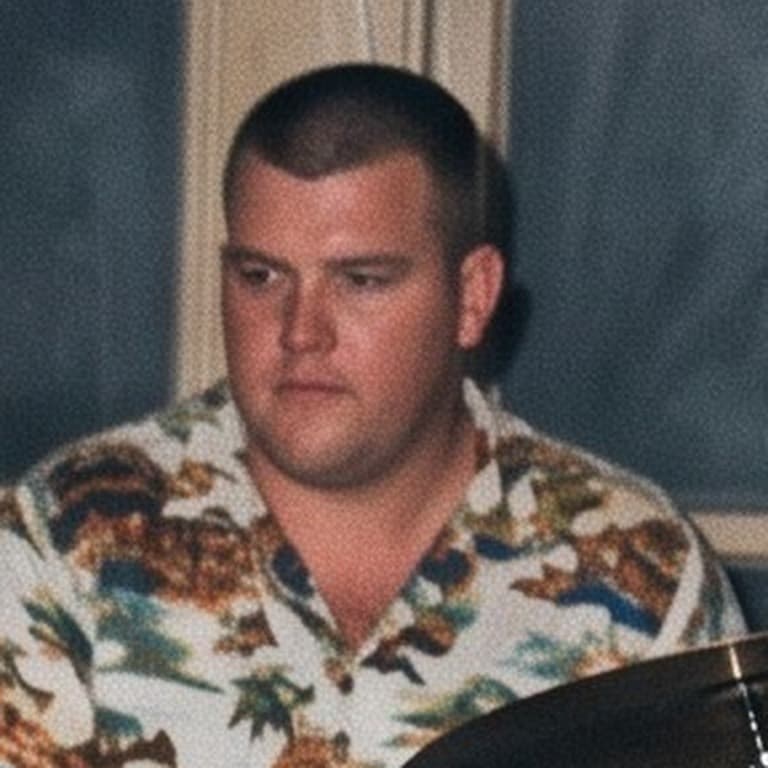
Jules Comeaux, crew cut and a Hawaiian shirt, behind his drums
Jules Comeaux

Tag No. 5

Jules Comeaux

Drums

On the sign 1969–1981 · Day job: body shop

Built his kit in 1969 from two pawn-shop sets that did not match. The bass drum head was never replaced.

“It sounds better with the tape.”

Now: Owns a body shop in Denham Springs. The bass drum is in his attic. The head is still on it.

The corner of a bait shop: a plywood sign painted PECKERFISH in red over a pegboard of fishing line, a sunburst electric guitar against the wall, a minnow tank, a cash box and a cricket box
The counter, between shows. The sign, the line, the crickets, and Remy's guitar.
A gray-haired man in a white short-sleeved shirt playing a lap steel across his knees on a screened porch at dusk, eyes closed, a fiddle case at his feet
Alcide Melancon, 1978. The slow ones were on the lap steel.

Cards 2 to 5

The story, as filed

Four cards from the archive drawer. Water-stained, as received.

Sideband Label ArchiveCard 2 of 5

The Counter

Lucien Guidry was born in French Settlement in 1938. He opened the bait shop at Port Vincent in 1962, on a lot with a dock, a shell drive and a minnow tank. He had learned harmonica in the 1950s at the screen doors of juke joints north of Baton Rouge, where Black musicians played the slow, heavy blues that was later called swamp blues. He said for the rest of his life that he learned it there, and that he only played it somewhere else.

By 1969 four men were spending their Saturday afternoons at the counter. Jules Comeaux kept time on a minnow bucket. Dudley Landry, off the barges, brought a bass amplifier in his skiff. Alcide Melancon, the oldest, had played fiddle at church dances and fais do-do since 1949. Lucien asked him to play loud. He played louder. The first show was on the shell lot in September 1969. Remy Hebert, seventeen, joined from Gonzales in 1971 and hung his guitar on the wall.

Sideband Label ArchiveCard 3 of 5

Highway 190

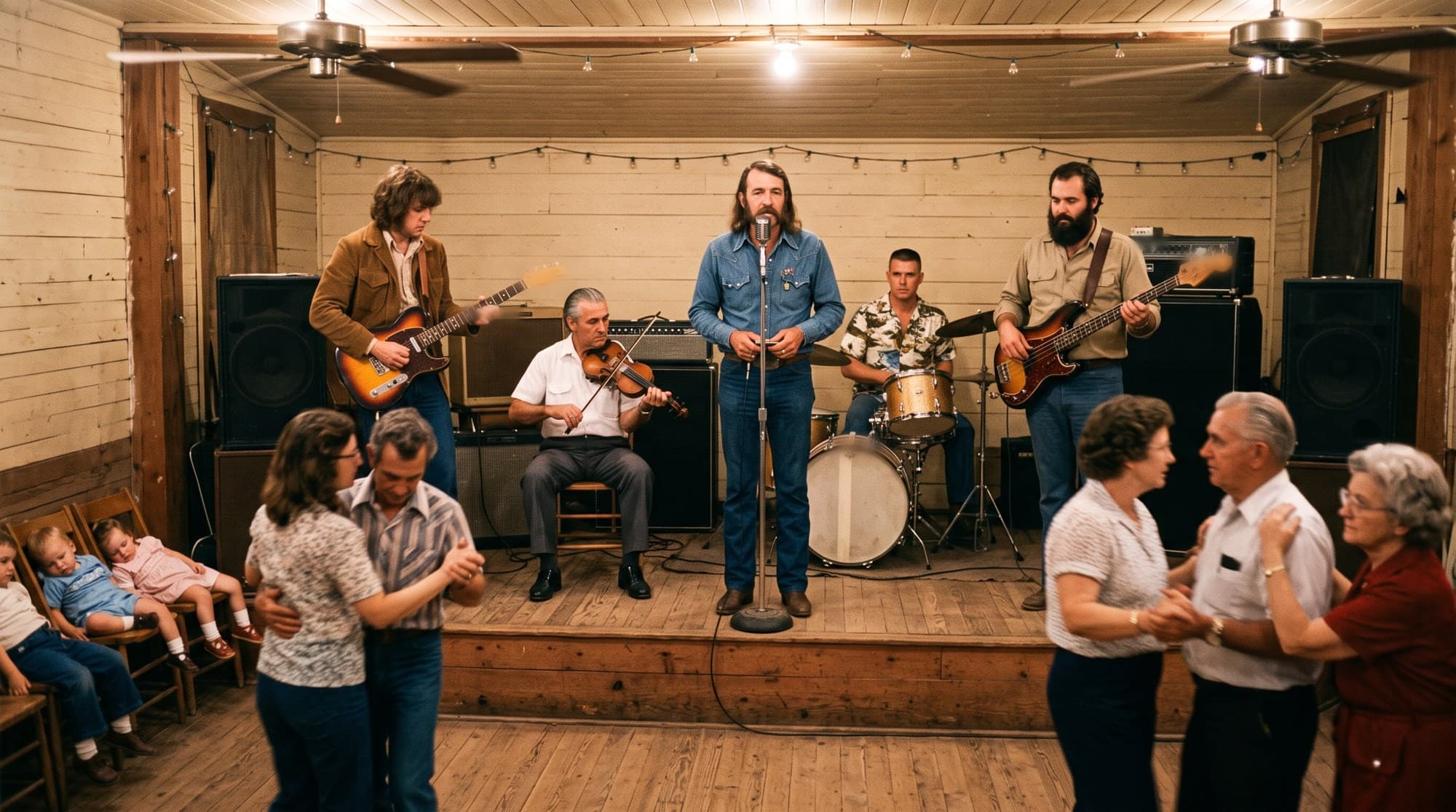
From 1971 the band played the dance halls west of Baton Rouge, out Highway 190 across the Atchafalaya Basin to Opelousas and Eunice, north to Mamou and Ville Platte, and south to Breaux Bridge and Lafayette. The halls were wooden, the floors were pine, and the dances started at nine. Families came together. Children slept on chairs along the wall.

The band played the waltzes and two-steps the halls expected, then played them louder, with a harmonica and an electric guitar in front. Cid played through an amplifier for the first time in 1972. Under the Sign came out in 1971 and was sold from the bait-shop counter. Highway 190 After Dark followed in 1975 and was sold from the counter and from the bed of Jules's pickup.

Sideband Label ArchiveCard 4 of 5

The River Book

Dudley Landry worked the Mississippi barges out of Baton Rouge. When the river was high the boats ran long and he stayed aboard. In the spring of 1973 the Mississippi stayed above flood stage for weeks, the Morganza Spillway was opened, and Dudley missed eleven Saturdays.

Lucien kept a ledger at the counter for the shop's accounts. That spring he began writing the band's shows in the back of it: the date, the place, and the reading on the staff gauge he had painted on his own dock piling. Where the bass player's name would go, he wrote the river stage. The band called it the River Book. Lucien kept it until 1981.

In April 1979 the Amite came over its banks. The shop took a foot of water. The band played the Saturday on a neighbor's porch above the flood, without Dudley.

Sideband Label ArchiveCard 5 of 5

The Last Saturday

High Water Mark came out in 1980. It was the band's best record and the one Lucien said he was proudest of.

By 1981 Lucien had stood behind a counter for nineteen years and on a stage for twelve, and his knees had told him so for a while. In the summer a family from Maurepas offered to buy the shop and keep the minnow tanks. He accepted. The band agreed to stop with the shop.

The last show was on the shell lot behind the shop on a Saturday in September 1981, twelve years from the first. The river was low. Dudley played. The next morning Lucien took the sign down, and Remy took his guitar off the wall.

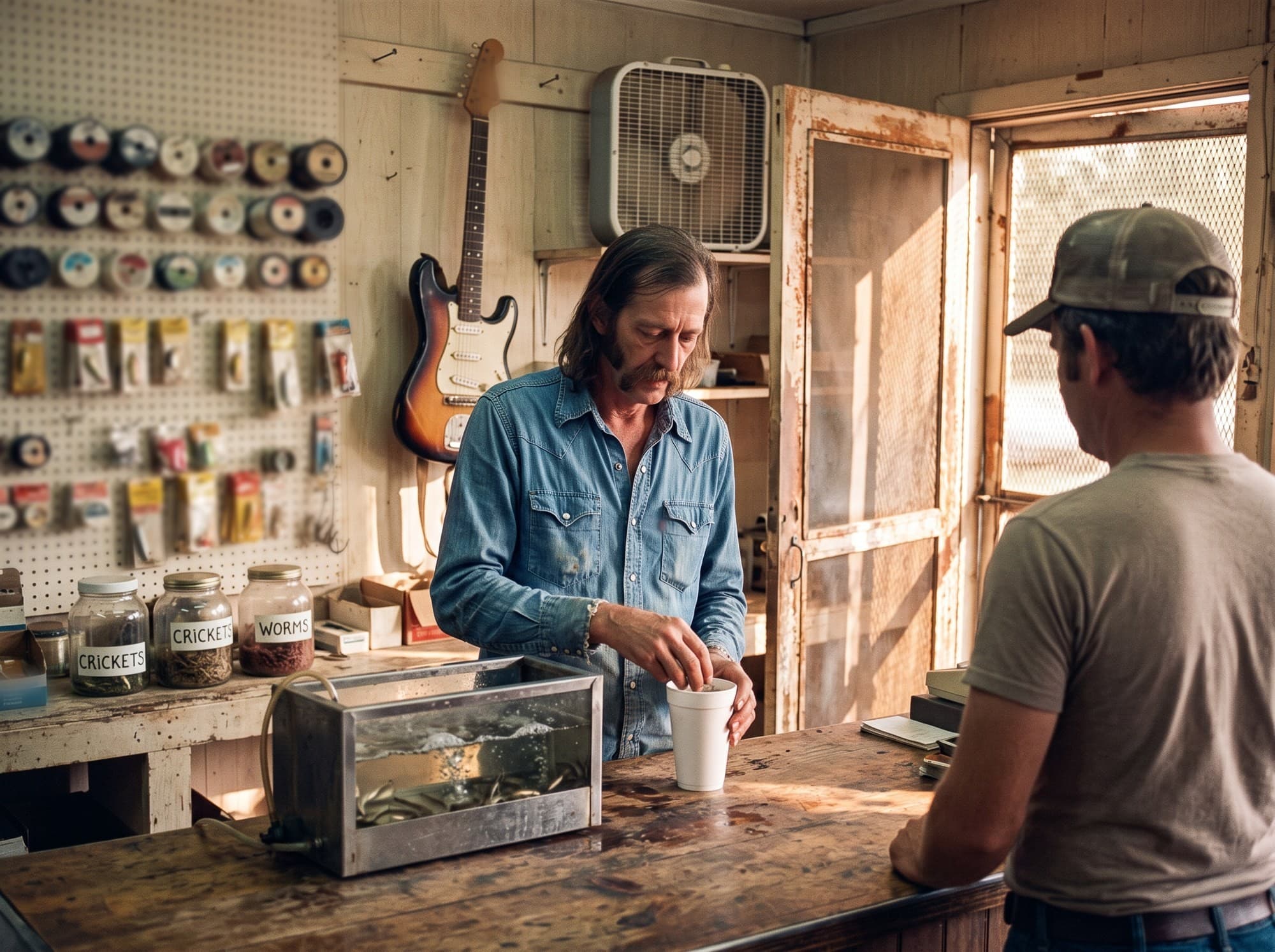
A wiry man with long sideburns and a drooping mustache in a denim western shirt counting minnows into a paper cup behind a worn bait-shop counter, a guitar hanging on the wall behind him
Lucien Guidry at the counter, 1973. Minnows a dollar.
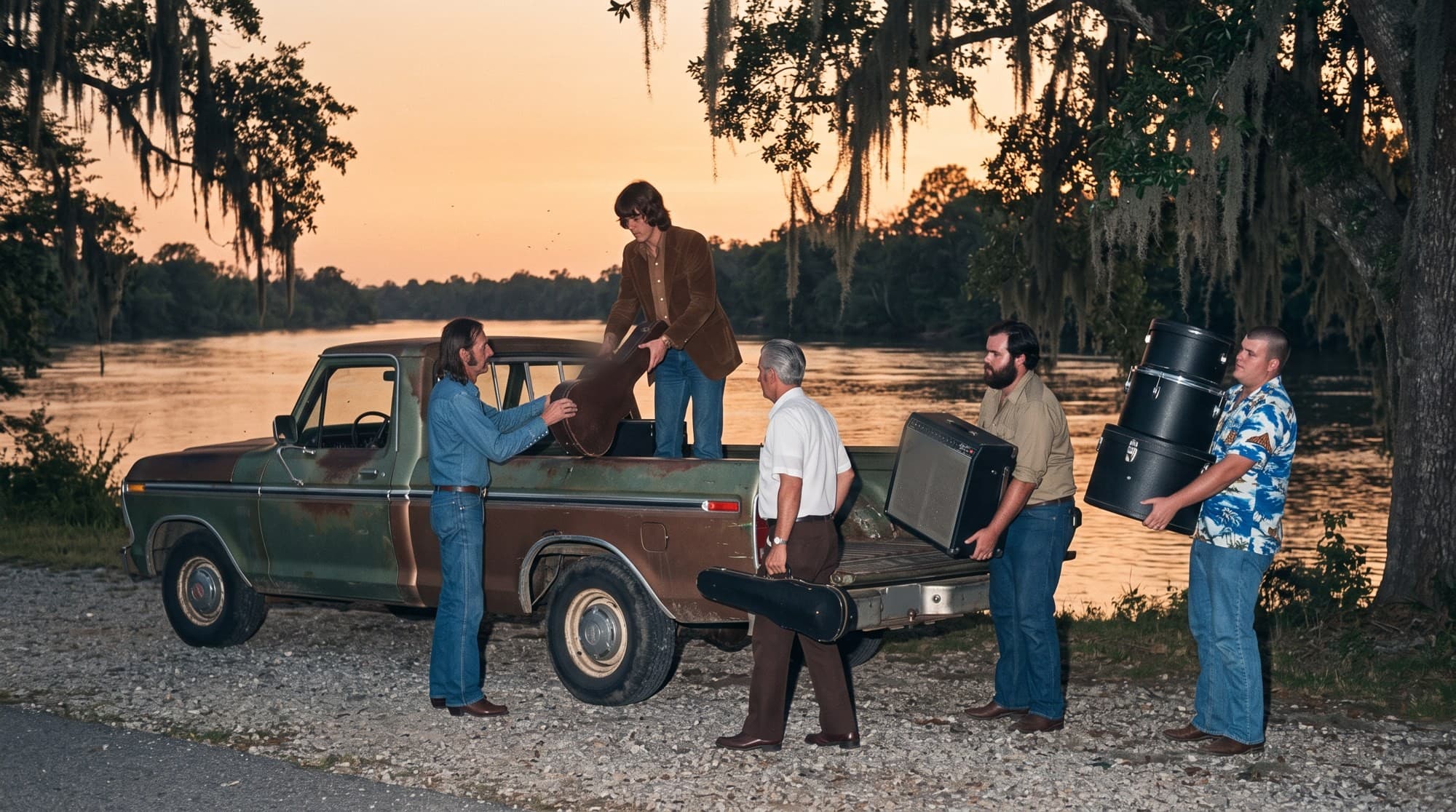
Five men loading guitar cases, drum cases and an amplifier into the bed of an old two-tone pickup under live oaks beside a river at dusk
Loading out for Highway 190, 1977. The pickup is Jules's.

Sold from the counter

Bayou Records

Three long-players, 1971, 1975 and 1980. Each was sold from the bait-shop counter, beside the crickets.

Bayou RecordsUnder the SignBR-101 · 1971Baton Rouge, La.

BR-101 · 1971

Under the Sign

The first record. Cut in one night in the bait shop after closing, on a borrowed two-track machine. The minnow tank can be heard on side two. Remy's first record with the band.

  1. 1Under the Sign2:56
  2. 2Amite River Saturday3:18
  3. 3Minnows a Dollar2:32
  4. 4French Settlement Waltz3:34
  5. 5Cypress Knee Blues4:07
  6. 6Bait's Two-Step2:43
  7. 7Port Vincent Bridge3:25
  8. 8Crickets in the Box2:51
  9. 9Shell Lot Shuffle3:08
  10. 10Ferry Landing Goodnight3:52
Open the record →
Bayou RecordsHigh WaterMarkBR-103 · 1980Baton Rouge, La.

BR-103 · 1980

High Water Mark

The last record. Written the summer after the April 1979 flood. Dudley plays on eight of the ten songs. The river kept him from the other two sessions, and Remy played bass.

  1. 1High Water Mark3:39
  2. 2Read the Staff3:06
  3. 3Dudley's on the River3:27
  4. 4Porch Above the Water4:03
  5. 5Flat-Bottom Two-Step2:38
  6. 6April on the Amite3:49
  7. 7Bayou Manchac3:34
  8. 8Sandbags3:01
  9. 9When the River Goes Down4:12
  10. 10From the Swamp3:16
Open the record →

On the board

Fais Do-Do Season, 1976

Twelve Saturdays, May to July. The letters were moved by hand every Sunday morning, before the shop opened.

Shell lot behind the bait shop

Church fair

Dance hall

Dance hall

Dance hall on the levee road

Dance hall, Highway 190

Fais do-do

Dance hall

Parish hall

Dance hall

Fais do-do

Shell lot behind the bait shop
The five-piece band on the bandstand of a wooden dance hall, couples waltzing on a pine floor, children asleep on chairs along the wall, string lights and ceiling fans
A fais do-do, 1976. The waltzes first. The children slept through the two-steps.

Dances nine till one. A dollar and a half at the door. Children free.

High water

The River Book

Lucien Guidry kept the shop's accounts in a ledger at the counter. From 1973 he wrote the band's shows in the back of it, with the morning reading from his dock staff. Where the bass player's name would go, he wrote the river.

12
11
10
9
8
7
6
5
4
3
2
1
0
April 1979 · staff not visibleAbove this mark, Dudley stays aboardThe last Saturday · September 1981

The dock staff

Painted by Lucien on his dock piling, 1966. Feet above his own low-water mark. Read at six every morning.

Shows · 1973 –

DatePlayedStaffBassRemarks
Mar. 3, 1973Gonzales4.2D. Landry
Mar. 31, 1973Breaux Bridge8.68.6Mississippi high. D. on the tow.
Apr. 21, 1973Opelousas9.19.1Morganza open. Remy on low strings.
June 9, 1973Port Vincent6.26.2Eleventh Saturday.
June 16, 1973Eunice3.0D. LandryBack.
Mar. 8, 1975Lafayette2.6D. LandryRecord. All ten.
Oct. 1, 1977Ville Platte2.2D. LandryDrum head split. Taped.
Apr. 14, 1979Porch, upriver—staff not visibleShop took a foot. Came by boat.
Sept. 26, 1981Port Vincent1.4D. LandryLast.
A heavyset bearded man in a sleeveless khaki work shirt coiling a mooring line on the deck of a river barge, a towboat and hazy smokestacks behind
Dudley Landry on the Mississippi at Baton Rouge, 1975. Between Saturdays.

Notes in the back of the book

Three Saturdays the ledger gives more than one line to.

1972

The Night Cid Plugged In

A dance hall on Highway 190, near Opelousas

The hall had a pine floor, one box fan and about four hundred people on it. Cid had played fiddle without a microphone for twenty-three years. Past the third row nobody could hear him.

At the break Remy taped a pickup to the top of the fiddle and ran a cord to his spare amplifier. Cid played the next waltz with his eyes shut. The floor filled to the walls. At the end he asked Remy to turn it down. Remy turned it down a quarter of a turn. Cid did not notice.

He asked for the same setting every night until 1981. After the last Saturday, Remy gave him the amplifier. It went to his porch on Bayou Manchac with a second one to match, and he practiced loud from then on.

1977

The Bass Drum Head

A parish hall, Ville Platte

Jules Comeaux built his kit in 1969 from two pawn-shop sets. The bass drum came from one and the head from the other.

At a parish-hall dance in Ville Platte in the fall of 1977 the head split during the second waltz. Jules did not stop. At the end of the song he borrowed a roll of black tape from the drawer under the fuse box, patched the head from the inside, and played the rest of the night.

He said it sounded better. He tuned the rest of the kit to it. The head was never replaced, and the tape is still on it.

1979

The High-Water Show

A porch above the Amite, near Port Vincent

The Amite rose for a week in April 1979 and came over its banks. The bait shop took a foot of water. The dance hall booked for that Saturday was closed.

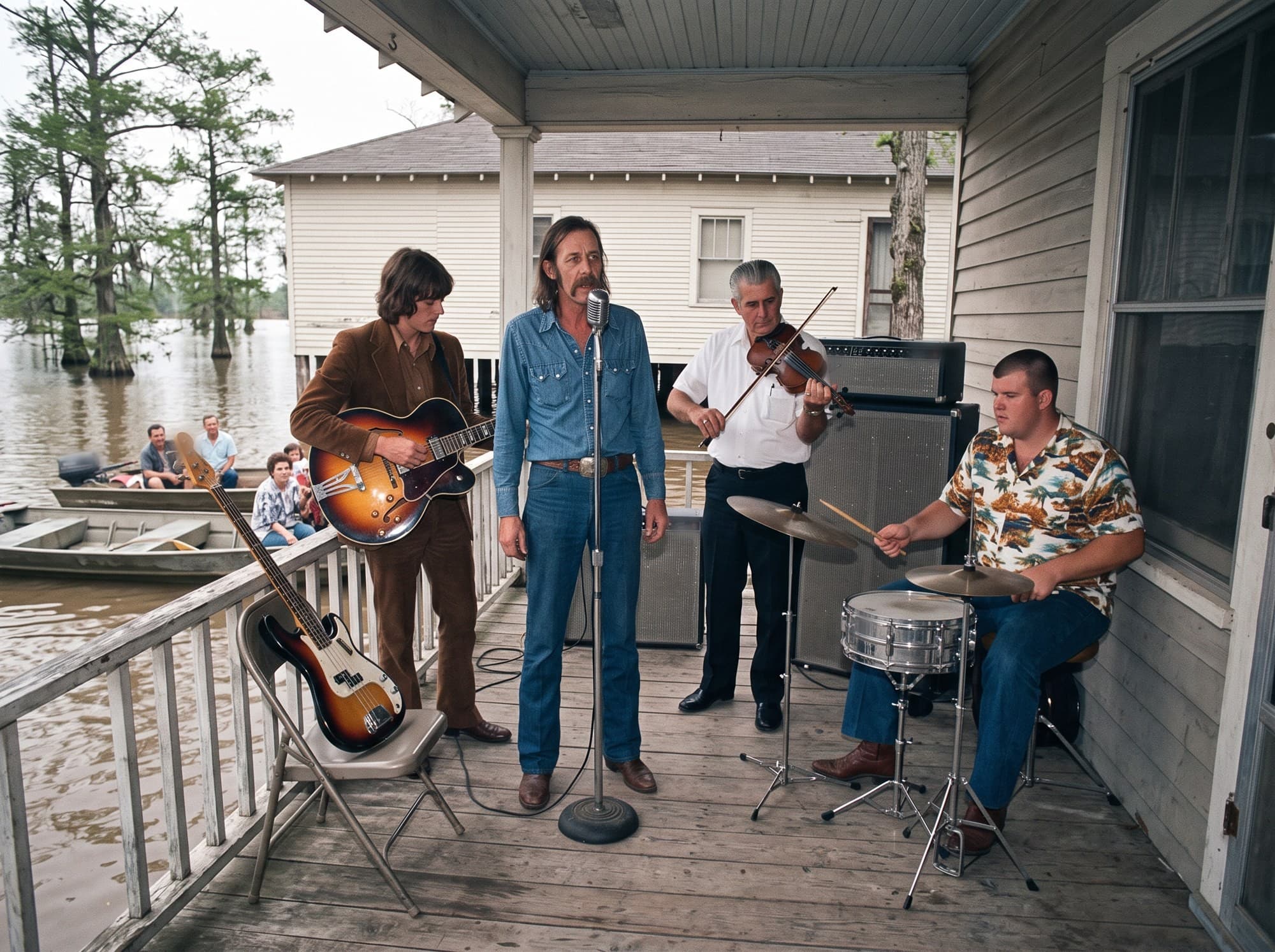
A neighbor upriver had a house on stilts with a wide porch, still dry. Lucien asked to borrow it. Remy brought his guitar across in a pirogue. Jules brought a snare drum and two cymbals. Cid brought the fiddle. The neighbors came in flat-bottomed boats and tied up to the porch rail.

Dudley was aboard a tow on the Mississippi. The band set out a folding chair for him and leaned his bass against it. In the River Book, under bass, Lucien wrote the reading from his dock staff. The dock was under water, so he wrote: "staff not visible."

Four musicians playing on the porch of a house on stilts above brown floodwater, neighbors listening from flat-bottomed boats tied to the rail, an empty folding chair with a bass leaning on it
April 1979. Four men on a porch. The chair is Dudley's. The neighbors came by boat.

Tacked by the register

Things on the wall

What a customer could read while Lucien counted the minnows.

The Sign

Painted by Lucien Guidry on the afternoon of the first show, September 1969, on a sheet of exterior plywood with red barn paint. It hung over the bait-shop counter between shows and went to every show in the bed of the pickup. It came down in September 1981. It is in Lucien's carport in French Settlement.

Two Nails

Remy Hebert's sunburst guitar hung on two nails behind the counter between shows, from 1971 to 1981. Customers were asked not to touch it. The archive has no record that any did.

The Dock Staff

A staff gauge Lucien painted on the piling at the end of his dock in 1966, black and red, in feet and tenths above his own low-water mark. He read it at six every morning. The readings in the River Book come from it.

The Bait Book

A composition book on the counter, beside the cricket box. Anyone who wanted to know where the band played next wrote a name and a route box. Lucien mailed a postcard on Thursdays. The book filled eleven volumes.

The Empty Chair

When Dudley was on the river the band set a folding chair on the stage and leaned his bass against it. It was not played. Remy played the bass lines on the low strings of his guitar.

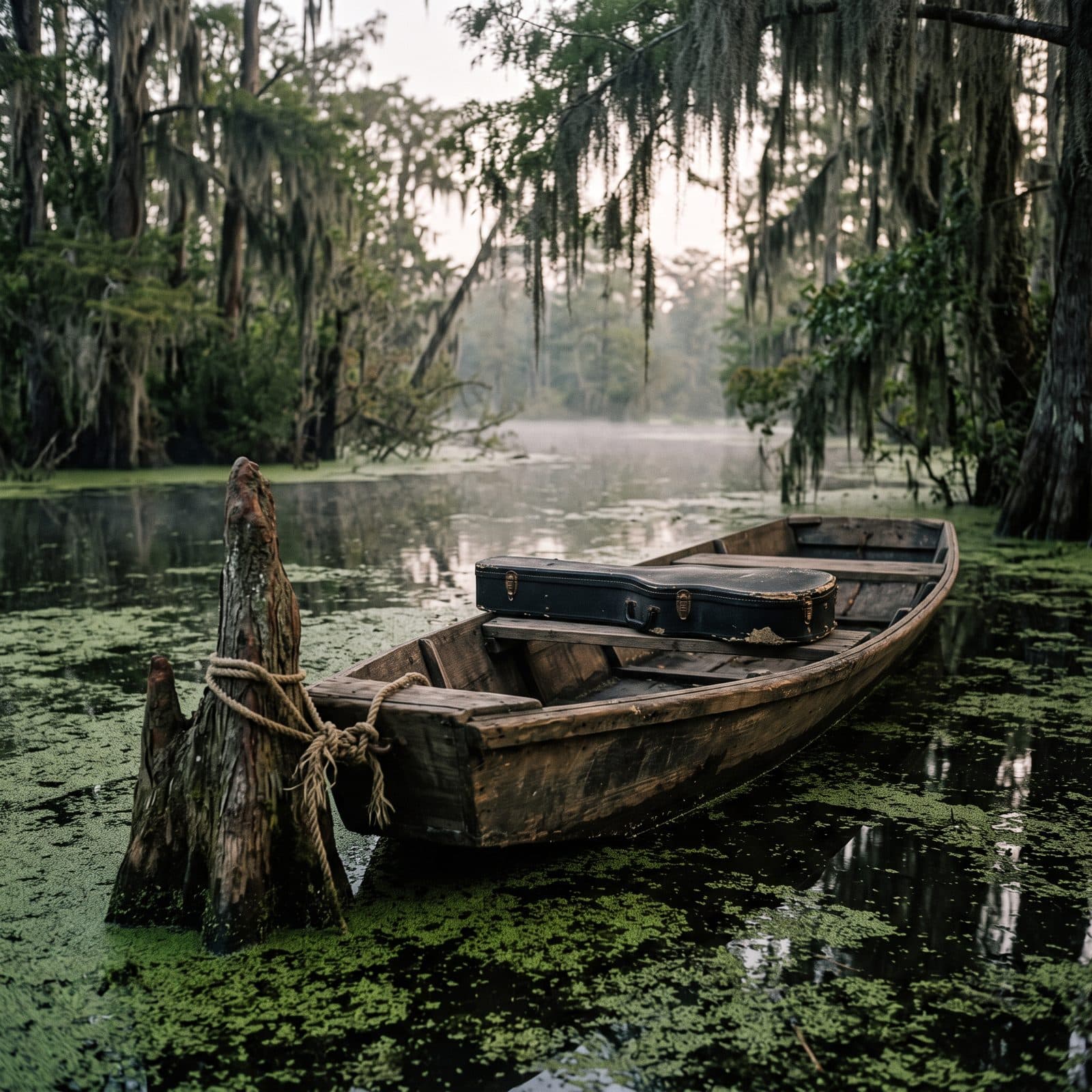
A wooden flat-bottomed boat tied to a cypress knee in duckweed-covered water, a black guitar case on the seat
Transport, April 1979. Remy's guitar went to the porch show by pirogue.
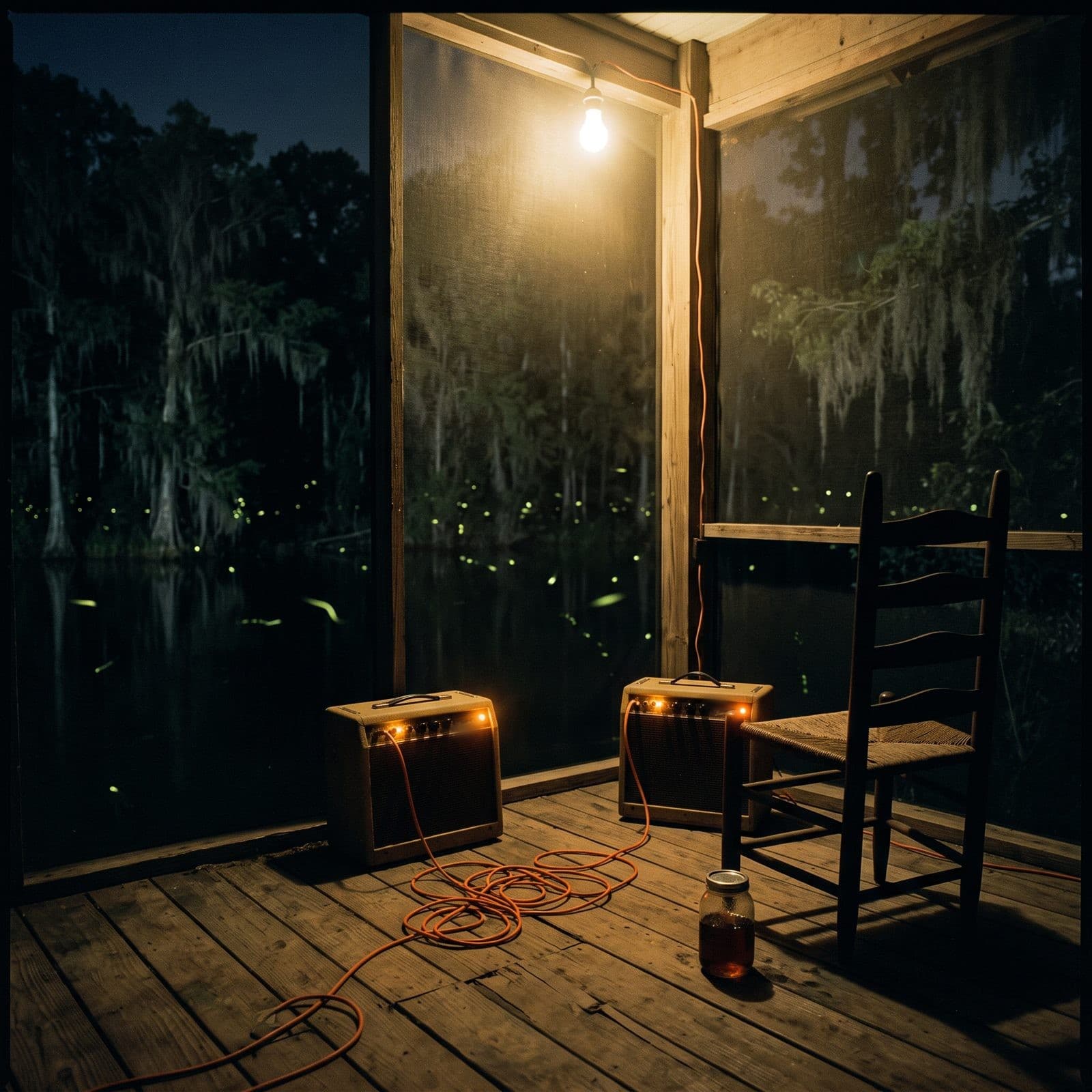
Two small tube amplifiers glowing on a screened porch at night beside a bayou, an orange extension cord, a ladder-back chair and a jar of tea, fireflies over the water
Cid's porch, Bayou Manchac. The two amplifiers, after 1981. He practiced loud.

From the papers

The Plank Road Weekly, Baton Rouge · June 1975

A bait shop band goes west

PeckerFish take the Port Vincent sound out Highway 190

By the staff

PeckerFish have played the shell lot behind Lucien Guidry's bait shop on the Amite River since 1969. This year they are playing it less. The band's second record, Highway 190 After Dark, was recorded in Lafayette in March, and the band has spent most Saturdays since in the dance halls between the Atchafalaya and Ville Platte.

Guidry sings and plays harmonica. Remy Hebert, twenty-one, plays lead guitar. Alcide Melancon, the fiddler, is sixty and plays seated. Jules Comeaux plays drums. Dudley Landry plays bass when the Mississippi allows it.

The band plays waltzes and two-steps, and plays them loud. The dancers do not appear to object. The bait shop is open from six.

Tidewater Beat, Biloxi · May 1980

Five men and a river

The Amite River band that keeps a ledger of the water

From our Louisiana correspondent

PeckerFish came over from Louisiana on Saturday and played three hours at a dance on the Back Bay. The floor did not empty once.

The band's new record is High Water Mark, written after last April's flood on the Amite River, which put a foot of water in bandleader Lucien Guidry's bait shop. The songs are about the river, the flood and the people who live beside both.

The band keeps a ledger of every show it has played since 1973. Where its bassist, a Mississippi River deckhand, has been absent, the ledger gives the river stage instead. Guidry showed this reporter the book. It is accurate to the tenth of a foot.

On the counter

The bait book

Eleven composition books, 1969–1981. Each entry is a name and a route box. Lucien mailed the cards on Thursdays. Three entries, as written.

  1. I decked on the same tow as Dudley Landry in the spring of '73. He missed every one of those Saturdays and never complained once. When the river came down I went to see what he'd been missing. I have not missed a show since, unless I was on the river too.

    T. Bourgeois, deckhand · Donaldsonville, LA ★★★★★

  2. Had them in my hall nine times. They came in by eight, played the waltzes when the old people wanted waltzes, played loud when the young ones wanted loud, and the floor was full until one. Mr. Melancon tipped his hat to my wife every night. Paid them in cash and they counted it in front of me.

    A. Fontenot, dance hall · Mamou, LA ★★★★★

  3. My husband farms crawfish and he does not dance. I do. I danced to PeckerFish from 1972 until the last Saturday, and I signed the bait book every spring so Lucien would send me the card. I still have the cards. I still have the records. My husband still does not dance.

    Mrs. O. Broussard · Henderson, LA ★★★★★

  4. I bought minnows at the shop in 1974 and asked about the sunburst guitar on the two nails. Mr. Guidry said it was Remy's. I asked if I could hold it. He sold me two dozen minnows instead. I understood.

    C. Babin · Port Vincent, LA ★★★★★

  5. By 1980 there was a dark circle the size of a saucer in the middle of Jules Comeaux's bass drum head. At the Lafayette dance hall a boy asked him what it was. Jules said, That's where I hit it.

    P. Arceneaux · Lafayette, LA ★★★★★

  6. At the Eunice fais do-do in 1976, Mr. Melancon played lap steel on Cid's Slow One. The children asleep along the wall did not wake up. Two of the grandmothers did, to listen.

    Name Withheld · Eunice, LA ★★★★★

Sign the bait book

Put your name in the book. The Sideband Label list hears first about new recordings, shirts, and anything the archive pulls out of the water.

Sign the book

One name per line. Pencil is fine.